

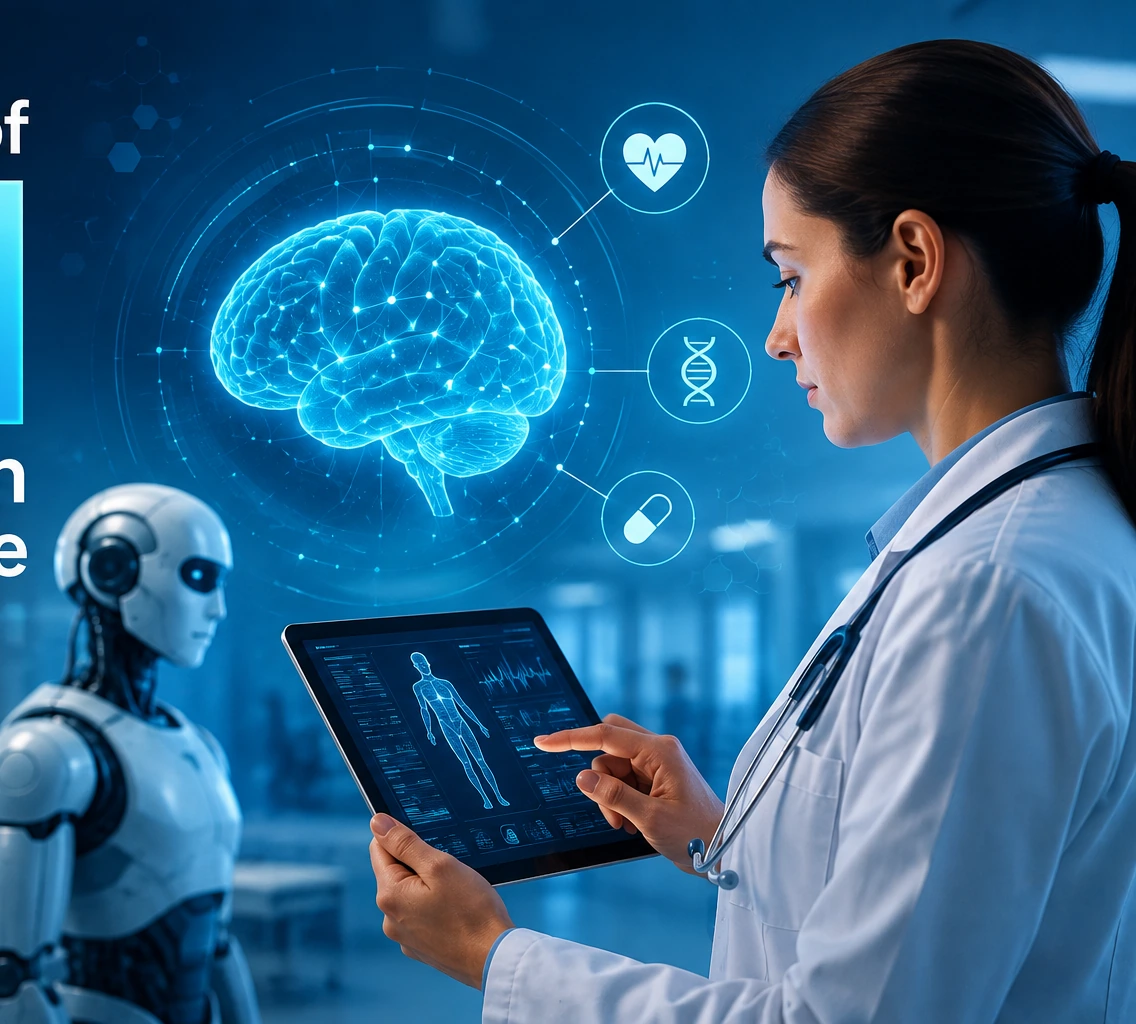
Artificial intelligence (AI) is becoming an increasingly important part of modern healthcare. From helping medical professionals analyze information to supporting drug discovery and administrative tasks, AI has the potential to make healthcare more efficient and personalized. While it cannot replace doctors, nurses, and other healthcare professionals, it can provide tools that support better decision-making and improve how healthcare services are delivered.
AI in Medical Diagnosis
One of the most promising applications of AI is assisting with medical diagnosis. AI systems can analyze large amounts of medical information and identify patterns that may be difficult to detect manually.
In areas such as medical imaging, AI can assist professionals in reviewing X-rays, scans, and other images. These systems may help identify abnormalities and highlight areas that deserve closer attention.
AI should be viewed as a support tool rather than an independent replacement for qualified medical professionals. Human expertise remains essential for interpreting results and considering the patient’s complete circumstances.
Personalized Healthcare
Every patient has different characteristics, medical histories, lifestyles, and treatment needs. AI can help healthcare providers analyze information from multiple sources and identify patterns that may support more personalized care.
Data analysis can help professionals understand how different patients respond to treatments and identify factors that may influence outcomes. Over time, this could contribute to more individualized approaches to healthcare.
However, personalization depends on accurate, relevant, and appropriately protected data.
Drug Discovery and Research
Developing new medicines can take years and require extensive research. AI is increasingly being explored as a tool for analyzing biological information, identifying potential drug candidates, and supporting researchers in understanding complex diseases.
By processing large datasets more quickly, AI can help researchers investigate relationships that might otherwise take significant amounts of time to identify.
This does not eliminate the need for laboratory research, clinical trials, and regulatory review. Instead, AI can potentially make parts of the research process more efficient.
Supporting Healthcare Professionals
Healthcare workers often spend considerable time on administrative responsibilities, documentation, scheduling, and information management. AI-based tools can assist with some of these repetitive tasks.
Automating appropriate administrative work may allow professionals to spend more time interacting with patients and focusing on clinical responsibilities.
The technology must still be carefully monitored to prevent errors and ensure that important information is handled appropriately.
Remote Monitoring and Virtual Care
AI can also support remote healthcare. Digital devices can collect information such as activity levels or other health-related measurements, depending on the device and use case.
AI systems can analyze data and potentially identify patterns that require attention. Remote monitoring may be particularly useful for patients who need ongoing observation without frequent in-person visits.
Virtual healthcare tools can also improve access for people who have difficulty traveling to medical facilities.
Predictive Analytics
Healthcare organizations generate enormous amounts of information. AI can analyze this information to identify trends and potentially predict certain outcomes.
Predictive tools may support hospital planning, resource management, patient risk assessment, and public health research. However, predictions are not guarantees, and healthcare professionals must consider the limitations of any algorithm.
Challenges and Ethical Considerations
The growing use of AI in healthcare also creates important challenges. Patient privacy and data security are major concerns because medical information is highly sensitive.
AI systems can also produce inaccurate results or reflect biases present in the data used to develop them. Healthcare organizations therefore need appropriate testing, oversight, transparency, and human supervision.
Patients should also understand when AI is being used and how their information is handled.
The Future of AI in Healthcare
AI is transforming healthcare by supporting diagnosis, research, personalized care, administration, and data analysis. Its greatest value may come from helping healthcare professionals process information and make more informed decisions.
The future of healthcare will likely involve closer cooperation between human expertise and intelligent technologies. With responsible development, strong privacy protections, careful testing, and appropriate oversight, AI can become an important tool for improving healthcare while keeping patient needs at the center of medical care.